

The Department of Justice interim final rule issued on April 20, 2026, extended the original deadlines by one year. The standard is unchanged: covered public entities must meet WCAG 2.1 Level AA across their websites, mobile apps, and documents.
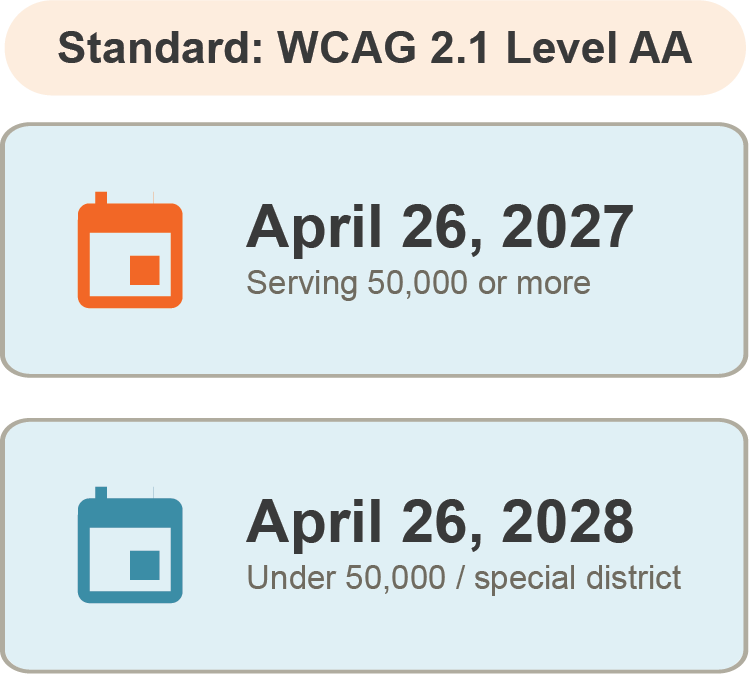
- If your school district, city, or township serves 50,000 or more people, your ADA Title II website compliance deadline is April 26, 2027.
- If it serves fewer than 50,000, or you're a special district government, your deadline is April 26, 2028.
We've built accessible websites for schools, municipalities, and nonprofits for more than two decades, with ADA compliance built into the platform rather than bolted on. This guide is for district administrators, city and township staff, and anyone responsible for a public website who needs a clear answer to “what changed, which deadline is ours, and what do we do now.” It's informational, not legal advice, please confirm specifics with counsel.
The Quick Answer
The standard is WCAG 2.1 Level AA. The deadline is April 26, 2027 for public entities serving 50,000+ people, or April 26, 2028 for smaller entities and special districts. This applies to public schools, local governments, public transit, municipalities and more. The DOJ has said it “fully anticipates implementing the regulation at the new deadline,” so the extra time is for building compliance, not delaying it.
What This Guide Covers
- What ADA Title II requires, and who it covers
- The corrected 2027/2028 timeline and why it changed
- How your population determines which deadline applies
- What compliance looks like for a municipal website specifically
- Why automated scanners alone won't get you there
- A practical roadmap grounded in the DOJ's own first steps
What Is ADA Title II, and Who Does It Cover?
Title II of the Americans with Disabilities Act requires state and local government entities to make their services, programs, and activities accessible to people with disabilities. That's a broad umbrella. It squarely covers public school districts, ISDs, and RESAs and it just as squarely covers cities, townships, villages, and special districts. In April 2024, the DOJ finalized a rule clarifying that this obligation extends to web content and mobile apps, adopting WCAG 2.1 Level AA as the technical standard built on four principles: Perceivable, Operable, Understandable, and Robust.
The Corrected Timeline: What Changed on April 20, 2026
The original 2024 rule set compliance dates by population: April 24, 2026 for larger entities, and April 26, 2027 for smaller ones and special districts. Four days before that first deadline, the DOJ published an interim final rule extending both by a year.
The DOJ's own guidance for public entities, First Steps Toward Complying with the Title II Web Rule, lays out eleven concrete action steps and is a solid, authoritative starting point. One caution: the extension was issued as an interim final rule and has drawn a legal challenge, so treat the dates as current guidance and stay alert for updates. Don't slow your preparation, since the underlying obligation hasn't paused.
| Entity (School or Local Government) | Original Deadline | Current Deadline |
|---|---|---|
Total population of 50,000 or more | April 24, 2026 | April 26, 2027 |
Population under 50,000, or special district | April 26, 2027 | April 26, 2028 |
Which Deadline Applies to You?
Your deadline is set by the total population your entity serves, not enrollment or staff count. Many smaller Michigan districts, townships, and villages will fall under the 2028 date, while larger cities and districts land on 2027. Because the classification carries real consequences, verify yours with counsel rather than assuming from size alone.
What Compliance Looks Like for a Municipal Website
For local governments, accessibility isn't abstract, it's about whether every resident can actually use the services you put online. Consider a well-organized municipal site like the City of Grand Haven, a Foxbright client: right under the hero video, a row of quick-link buttons points residents to the things they need most, City News, City Projects, the Community Calendar, the staff Directory, Forms & Permits, Meeting Notices, and Pay Bills Online. Every one of those touchpoints is a place accessibility matters.
A small municipal team with limited budget and time can find this daunting, which is exactly why building accessibility into the platform, rather than treating it as a separate scramble, makes the difference.
- Forms and permits: usable by someone relying on a keyboard or screen reader, not just a mouse
- Meeting agendas and minutes: often posted as PDFs, these need to be properly tagged and structured, not scanned images of text
- Calendar and event listings: navigable by assistive technology, so every resident can find a council meeting or community event
- Online bill pay and service requests: accessible, clearly labeled fields
- News and public notices: perceivable to residents with visual or cognitive disabilities
What WCAG 2.1 Level AA Looks Like Day to Day
Whether you're a district or a township, the requirements are the same:
- Images: meaningful alt text, not filenames
- PDFs and documents: minutes, agendas, forms, and menus are tagged and structured
- Videos: board and council meetings include captions
- Color contrast: meets minimum ratios for low-vision users
- Keyboard access: every function works without a mouse
- Forms: properly labeled fields assistive technology can announce
Pro Tip: Start with the pages and documents your community actually uses: this year's forms, current agendas, enrollment and bill-pay pages. Archive outdated PDFs as you go: documents you remove from your site are barriers you no longer have to fix.
Why Automated Scans Aren't the Whole Answer
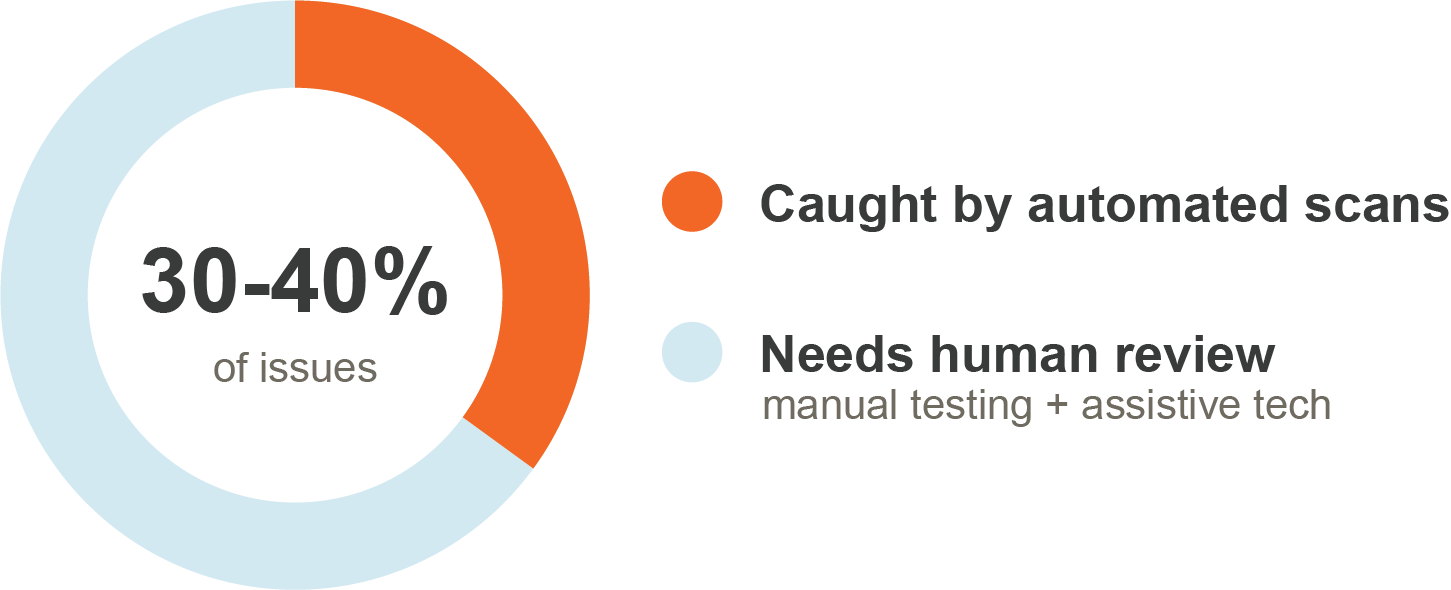
Automated scans are a useful first pass, but they catch only about 30 to 40 percent of real accessibility issues. Whether alt text is actually meaningful, whether a keyboard-only user can complete a permit form, whether a screen reader announces content in a sensible order. Those need a human reviewer with assistive technology. That's why our ADA compliance services pair automated scanning with ongoing audits, plus staff training and remediation.
A Practical Compliance Roadmap
- Confirm your deadline: verify your population classification and which date applies
- Identify all your web content: pages, PDFs, forms, and any mobile apps, following the DOJ's first-steps guidance
- Run a real scan: Scan your entire website including Pages, PDFs and Forms
- Prioritize by impact: fix what blocks critical tasks first: permits, bill pay, enrollment, emergency notices
- Train your staff: so the people posting content don't create new barriers
- Document and re-scan: keep records and scans on a schedule; accessibility is ongoing, not one-and-done
A Note on Enforcement Risk
We won't hand you a specific penalty dollar figure, the numbers circulating online vary and depend on circumstances. What's clear: non-compliance creates real exposure to DOJ or Office for Civil Rights complaints, private lawsuits, and a loss of public trust. This is informational content, not legal advice; consult your entity's counsel about your specific obligations and risk.
Frequently Asked Questions
What is the ADA Title II website compliance deadline?
Public entities serving 50,000 or more people must comply by April 26, 2027. Smaller entities and special districts have until April 26, 2028. Both dates reflect a one-year extension the DOJ issued in April 2026, and apply to schools and local governments alike.
Do ADA website rules apply to cities and townships, not just schools?
Yes. ADA Title II covers all state and local government entities — including cities, townships, villages, and special districts, as well as public school districts. The same WCAG 2.1 Level AA standard and deadlines apply.
What accessibility standard do public websites need to meet?
WCAG 2.1 Level AA, the standard adopted in the DOJ's 2024 Title II rule. It covers web pages, PDFs and other documents, and mobile apps, organized around content being perceivable, operable, understandable, and robust.
Does the deadline extension mean we can wait to start?
No. The DOJ has said it fully anticipates implementing the rule at the new deadline, and the underlying obligation to provide accessible services hasn't paused. The extra year is best used to build a documented, sustainable compliance program.
What municipal website content most often causes compliance problems?
Commonly, untagged PDF documents like meeting minutes and agendas, inaccessible online forms and permit applications, uncaptioned meeting videos, and poor color contrast. These are exactly the high-use touchpoints residents rely on most.
How can we find out where our website currently stands?
Foxbright offers ADA compliance scaning that gives schools and local governments a clear snapshot against WCAG 2.1 AA, along with ongoing scans, training, and remediation support built into our platform. Want to find out where you stand, reach out below!
The Bottom Line
The corrected timeline gives all schools and local governments nationwide real breathing room. But it doesn't change what compliance means or make it optional. The standard is WCAG 2.1 Level AA, it applies to districts and municipalities alike, and the safest move is to treat the extra year as time to build something durable.
Whether you're a district posting board minutes or a township posting permit forms, we can help you get there. Accessibility is built right into the Foxbright platform, backed by real people who know your community by name. A compliance scan is the fastest way to see where you stand today.
Get a clear picture of where your website stands. Request an ADA compliance scan, or talk to our team about WCAG 2.1 AA support for your district or municipality.
Foxbright — powerful websites and personal support for schools, municipalities, and nonprofits. Michigan-based and women-owned, partnering with communities for 20+ years.
As a Foxbright client, you can expect:











 ADA Title II Web Compliance: The 2027 and 2028 Deadlines for Schools, Cities, and Townships
  How to Choose a School Website Provider: A Vendor Checklist for Districts
  One App, One Platform: How Foxbright Unifies School Communication From Website to Mobile App to Mass Notifications
 Want to Learn More About Foxbright?



See the Difference for Yourself
Want a website that’s easy to use and backed by real people who care? Let’s talk about how Foxbright can support your organization's goals today, and for years to come.